
How to strap down any load
Pick what you're hauling for the full step-by-step guide. The basics are the same for everything: heavy end forward, centered, strapped to the trailer, and rechecked after a few miles.
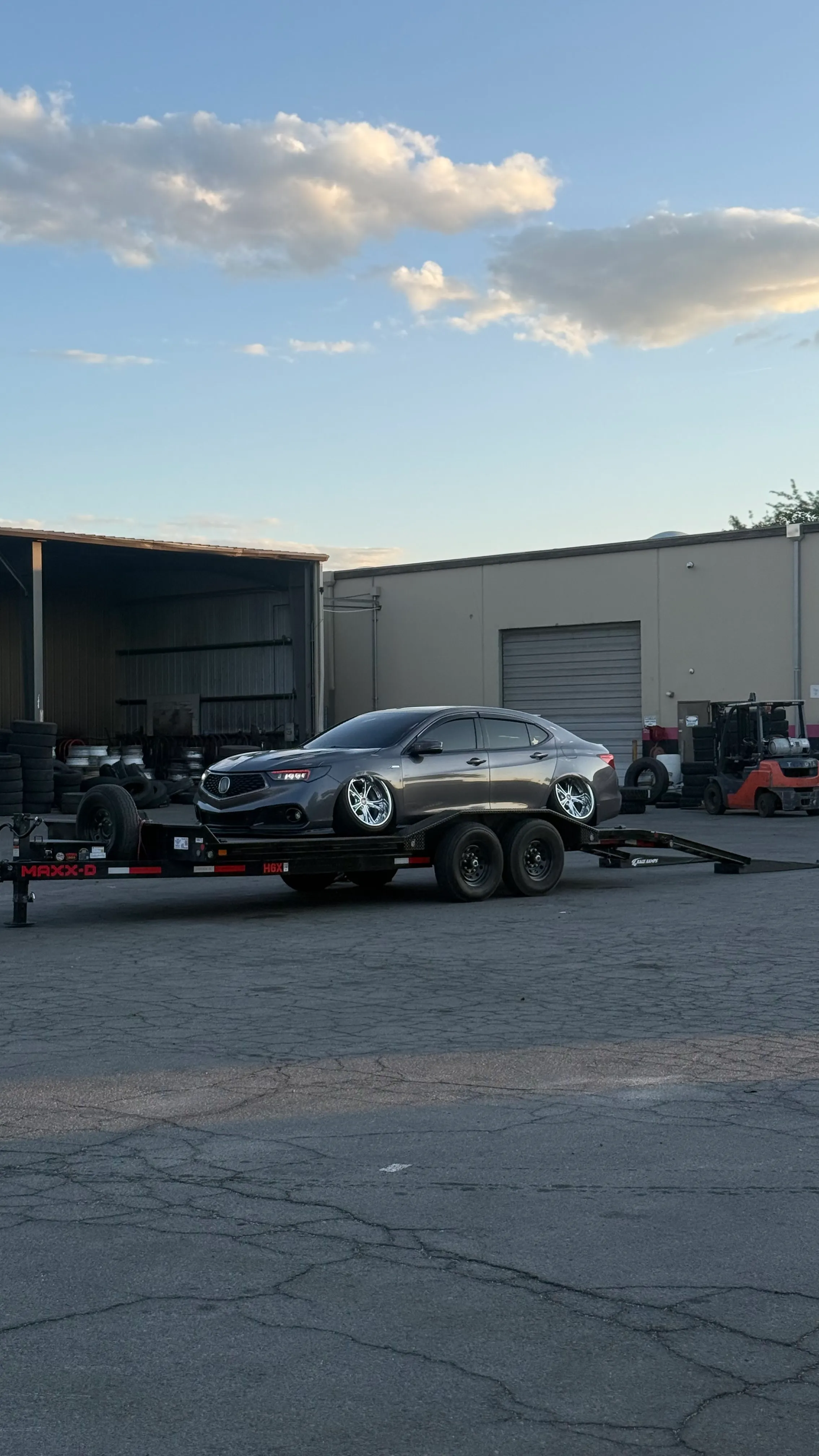
Cars and small SUVs
Loading on the gravity tilt or drive-over, strapping all four tires, and using the winch on a car that won't run.
Engine slightly ahead of the axles
One strap over each tire
Recheck within the first 10 miles
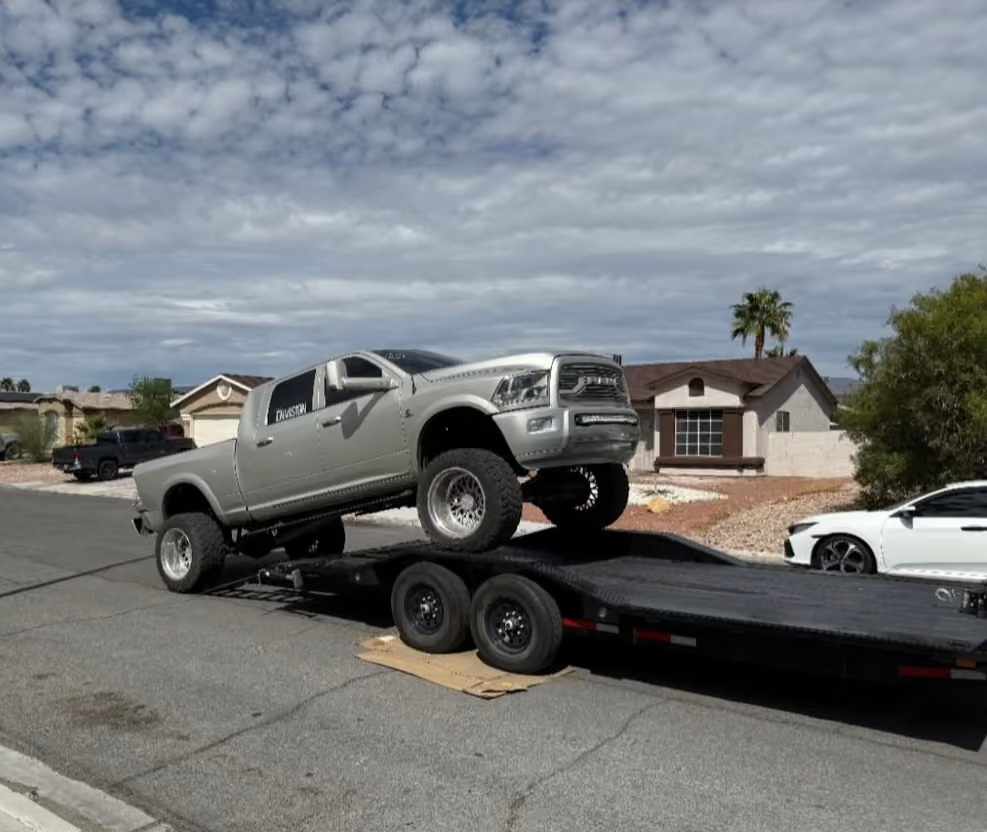
Pickups, duallies and big SUVs
Which trailer fits a dually or lifted truck, how much your truck weighs, and what you need to tow it.
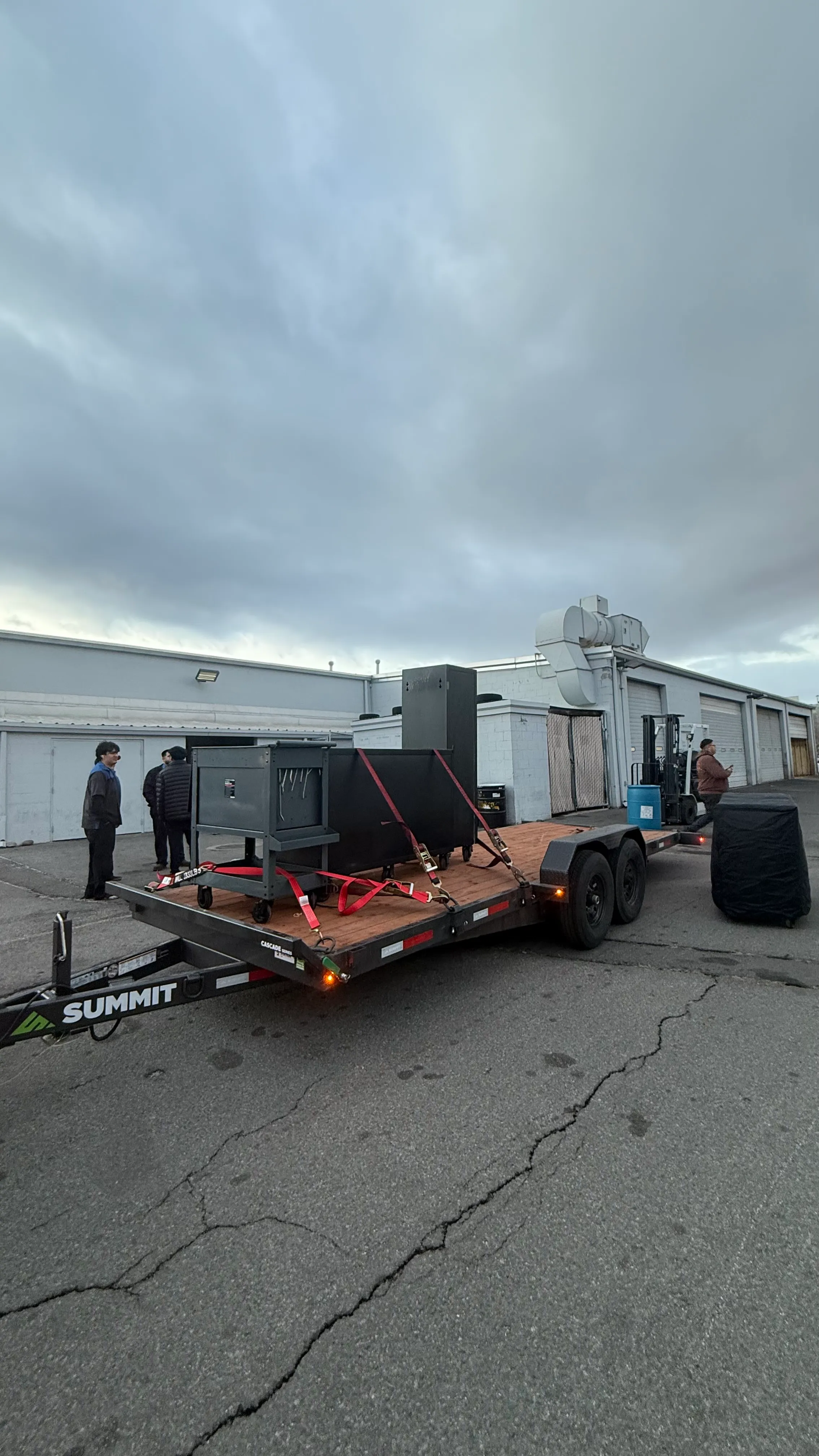
Equipment, sheds and containers
Skid steers, tractors, UTVs, sheds and 20' containers on the deckover. Tie-down points, buckets down, straps over the top.
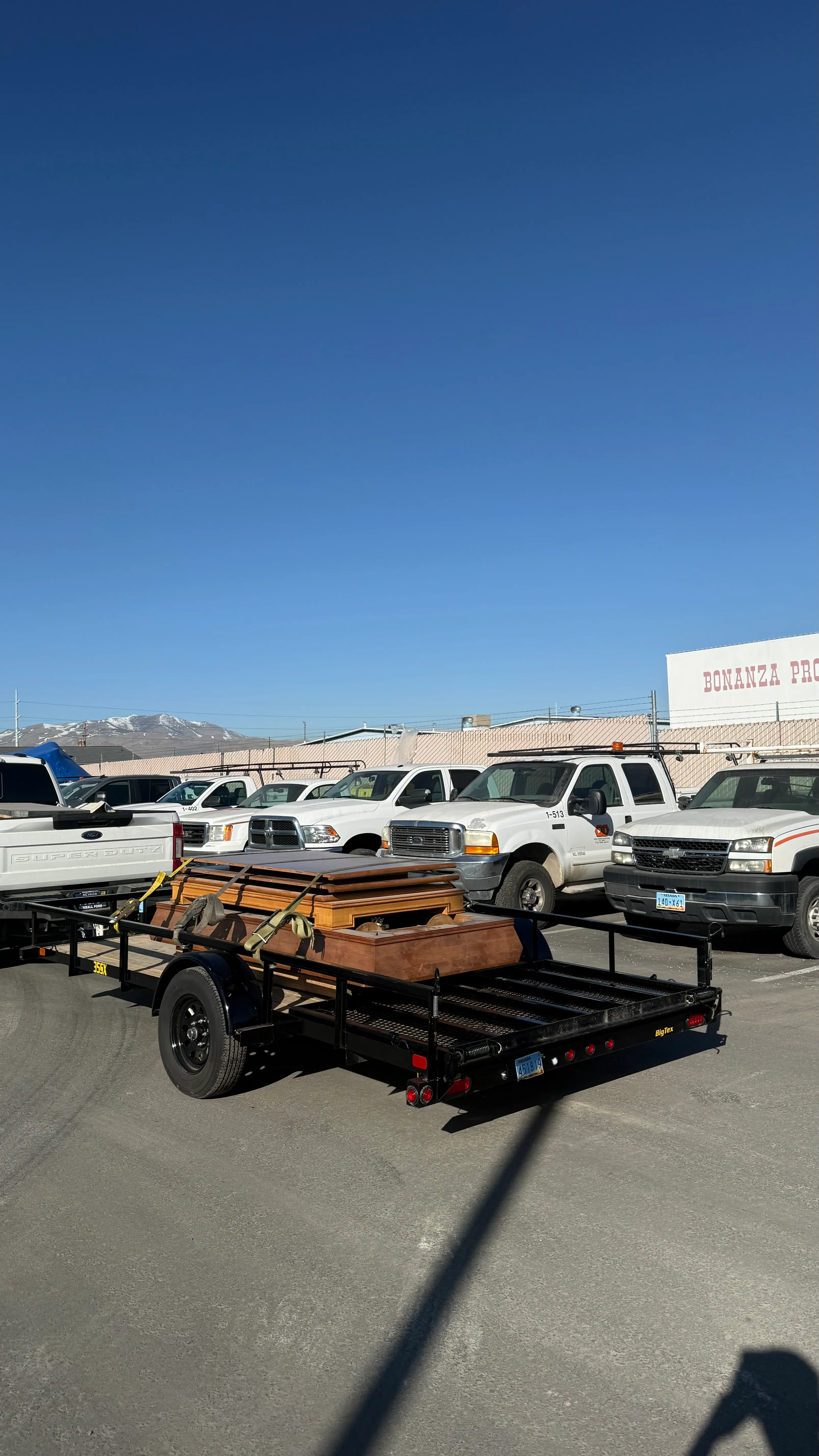
Dump runs, moves and materials
Loading the 5x10 and 7x14 for dump runs and moves, strapping furniture and appliances, and tarping yard waste.
Heavy stuff against the front wall
Strap tall items on their own
Tarp anything that can blow out
Mistakes we see most
No matter what you're hauling, these are the ones to avoid.
Load too far back
The number one cause of trailer sway. Keep the heavy end slightly ahead of the trailer's wheels.
Not rechecking straps
Loads settle once you're moving. Pull over within the first 5 to 10 miles and tighten again.
Hooking to the wrong spot
Bumpers, steps, suspension and hydraulic lines aren't anchors. Use the trailer's tie-down points and the load's tie-down loops or frame.
Load off to one side
An off-center load pulls the trailer sideways and wears out tires. Same gap on both sides.
Overloading the trailer
Every trailer lists its max load on its page. Heavy machines on the deckover are where people usually go over.
Before you drive
One walk around the trailer before you pull out.
Load is centered on the trailer
Heavy end slightly forward, same gap on both sides.
All straps and chains are tight
Push on the load. Nothing should move.
Ramps stowed, deck latched
Pull-out ramps slid back in and pinned, or the tilt deck latched down.
Trailer lights are connected and working
Running lights, brake lights and both turn signals.
Jack up, tires look good
Tongue jack cranked all the way up, and no tire looks low.
FAQs
Quick answers. Each guide has more detail for your load.
Four for cars, trucks and equipment, one at each corner. Add more for heavy machines or tall loads. Car haulers and the deckover come with straps. For utility trailers, bring your own.
Ratchet straps for cars, trucks, sheds and household stuff. Chains and binders for heavy steel machines. You can add chains and binders to any car hauler or deckover booking for $24.99. Never use rope or bungees for anything heavy.
Tight enough that the strap doesn't flap and the load doesn't move when you push on it. Don't crank so hard you dent appliances or crush a shed.
Within the first 5 to 10 miles, then every time you stop for gas or a break.
To the trailer's tie-down points on one end, and over the tires, the load's tie-down loops or its frame on the other. Never bumpers, suspension or brake parts.