
How to load and strap a car
Loading a car on a trailer for the first time? Follow these steps on either of our 20' car haulers. Straps and a 12,000 lb winch come with both.
Center the car side to side
Line the car up with the middle of the deck so there's the same space on both sides. An off-center car makes the trailer pull to one side the whole drive.
Same gap on both sides
Tires straight when you stop
Have someone spot you
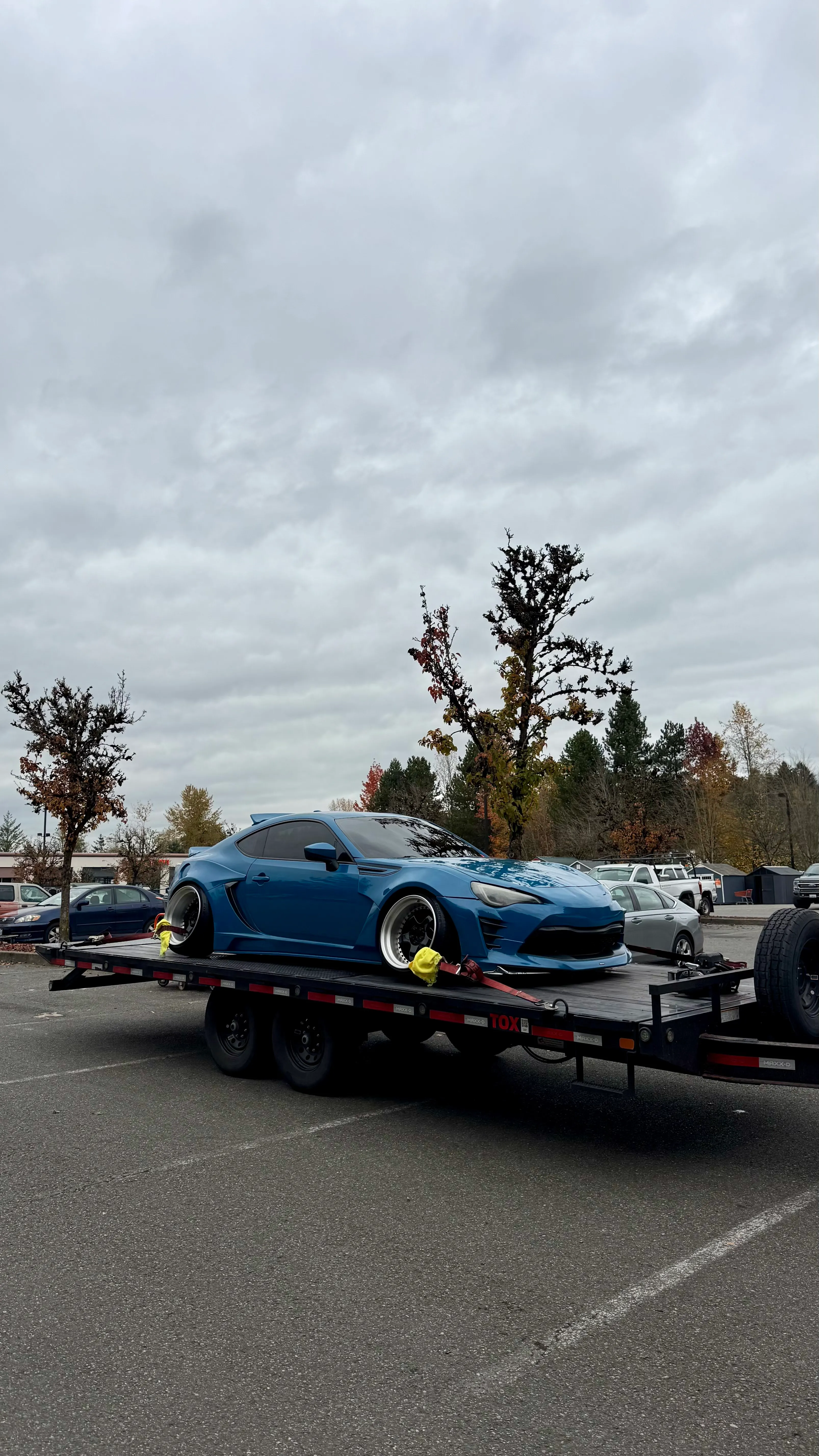
Park it a little forward
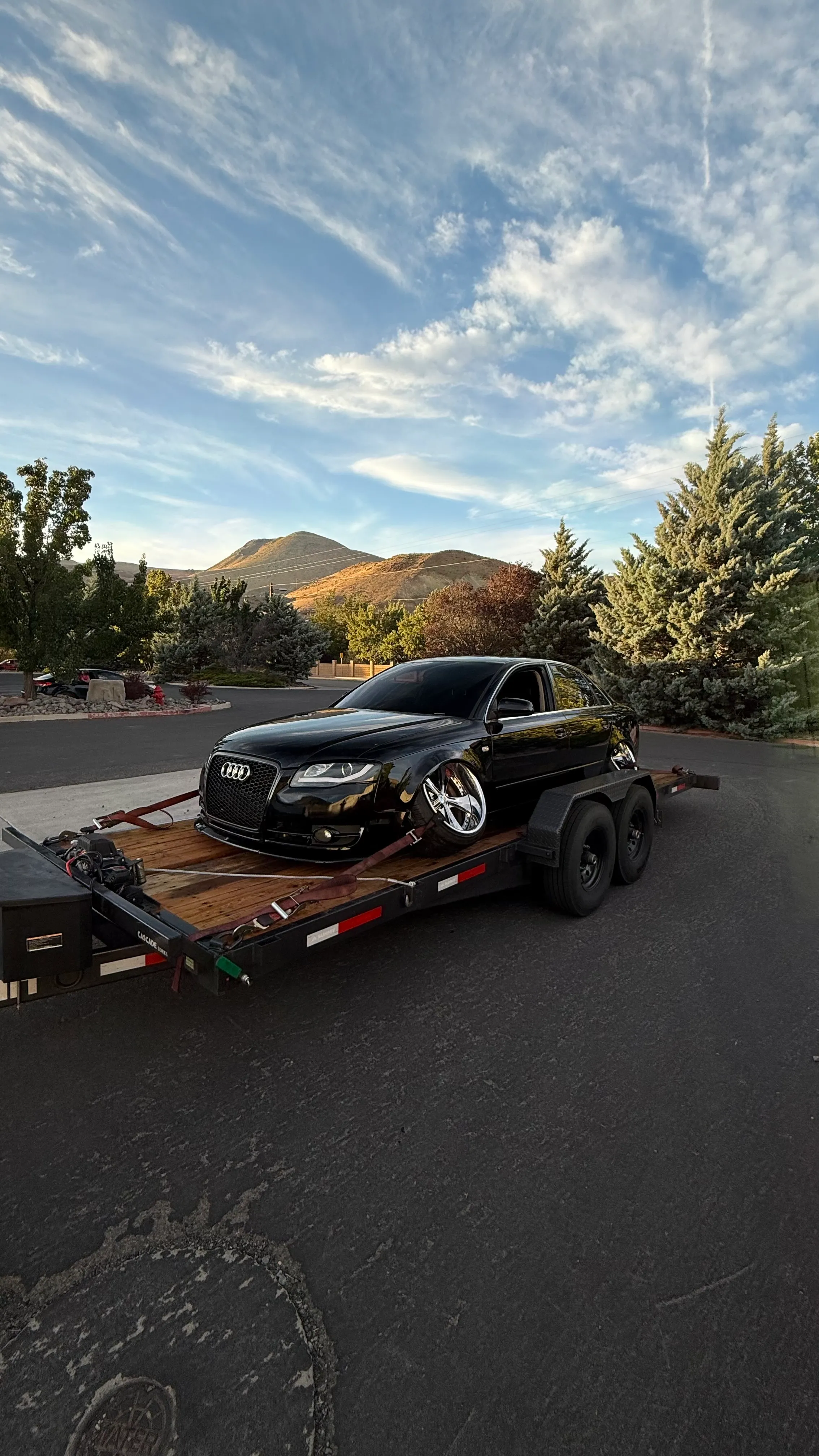
Stop with the engine slightly ahead of the trailer's wheels. That puts about 60% of the weight up front, which keeps the trailer from swaying. Too far back and the trailer gets light on the hitch and starts to wag.
Engine ahead of the axles
Truck's rear should sag slightly
Never load heavy end at the back
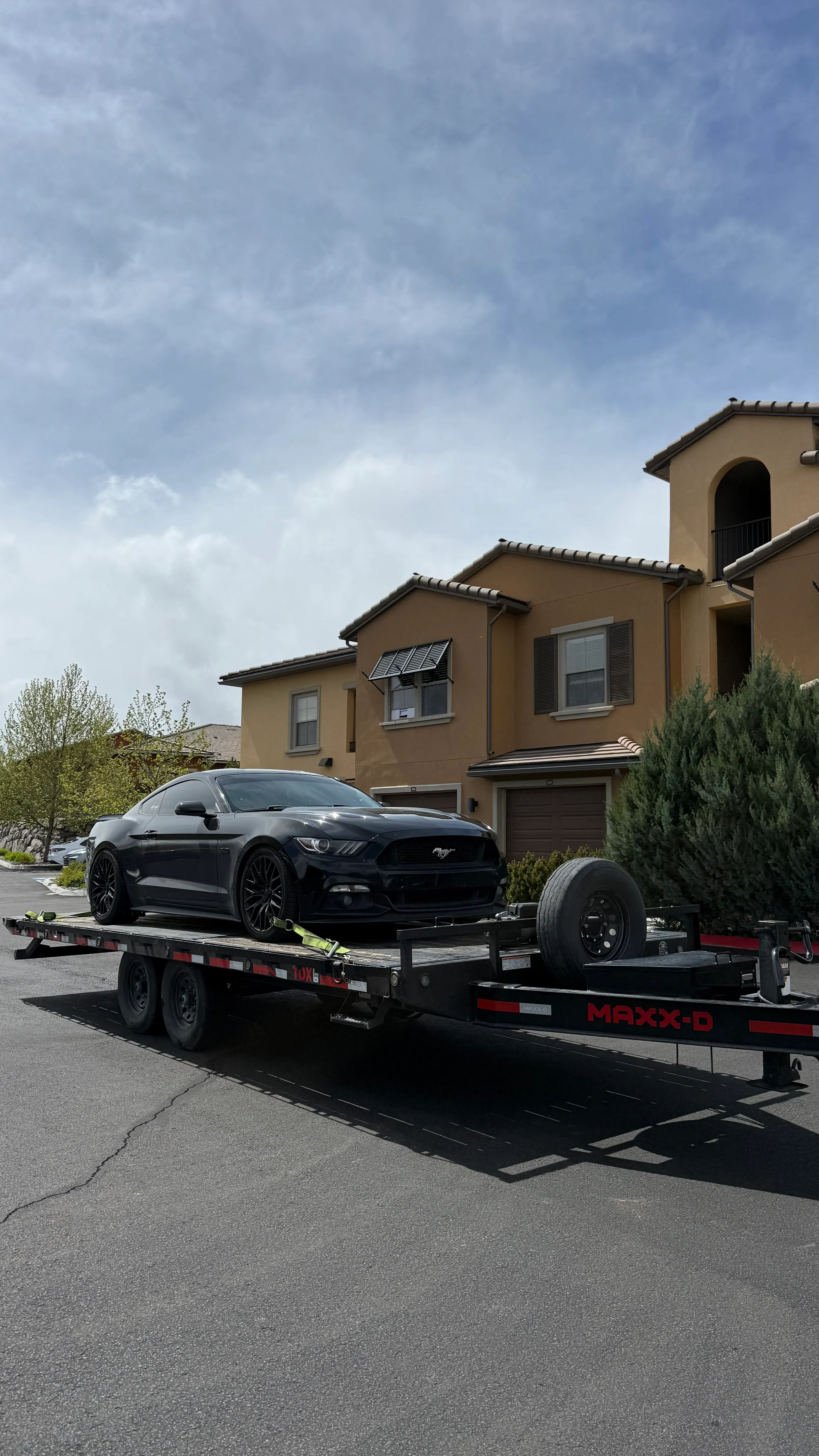
Load it slow and straight
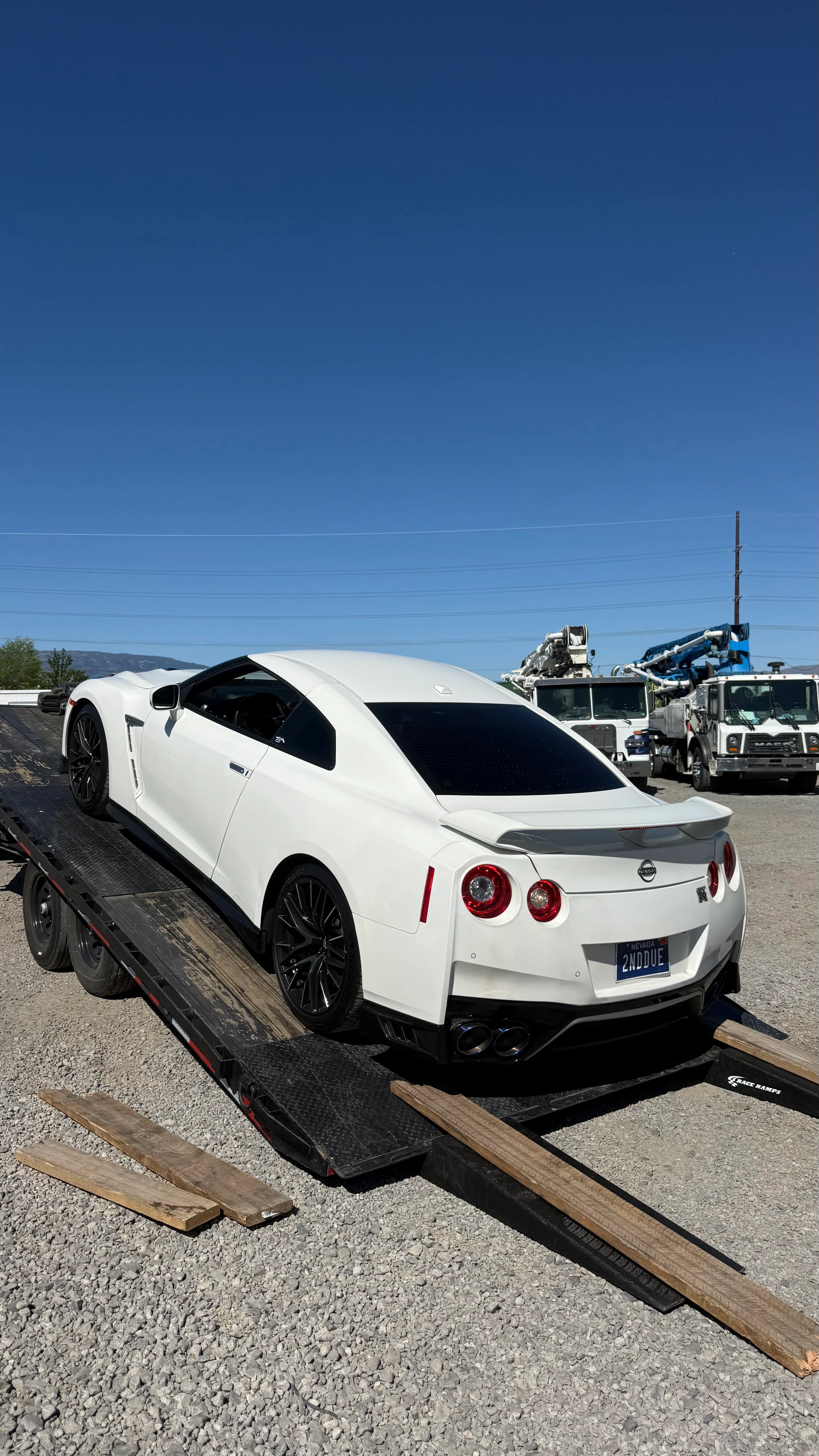
On the gravity tilt, unlatch the deck and step on the back so it tips to the ground, then drive on. On the drive-over, pull the ramps out from under the rear and drive up. Either way, go at walking speed and stop the second something doesn't look right.
Gravity tilt: deck tips down
Drive-over: ramps slide out
Walking speed the whole way
Strap all four tires
Use one strap per tire, four total. Wrap each strap over the tire and hook both ends to the trailer's tie-down points. Strapping the tires lets the car's suspension ride normally while the wheels stay locked to the deck.
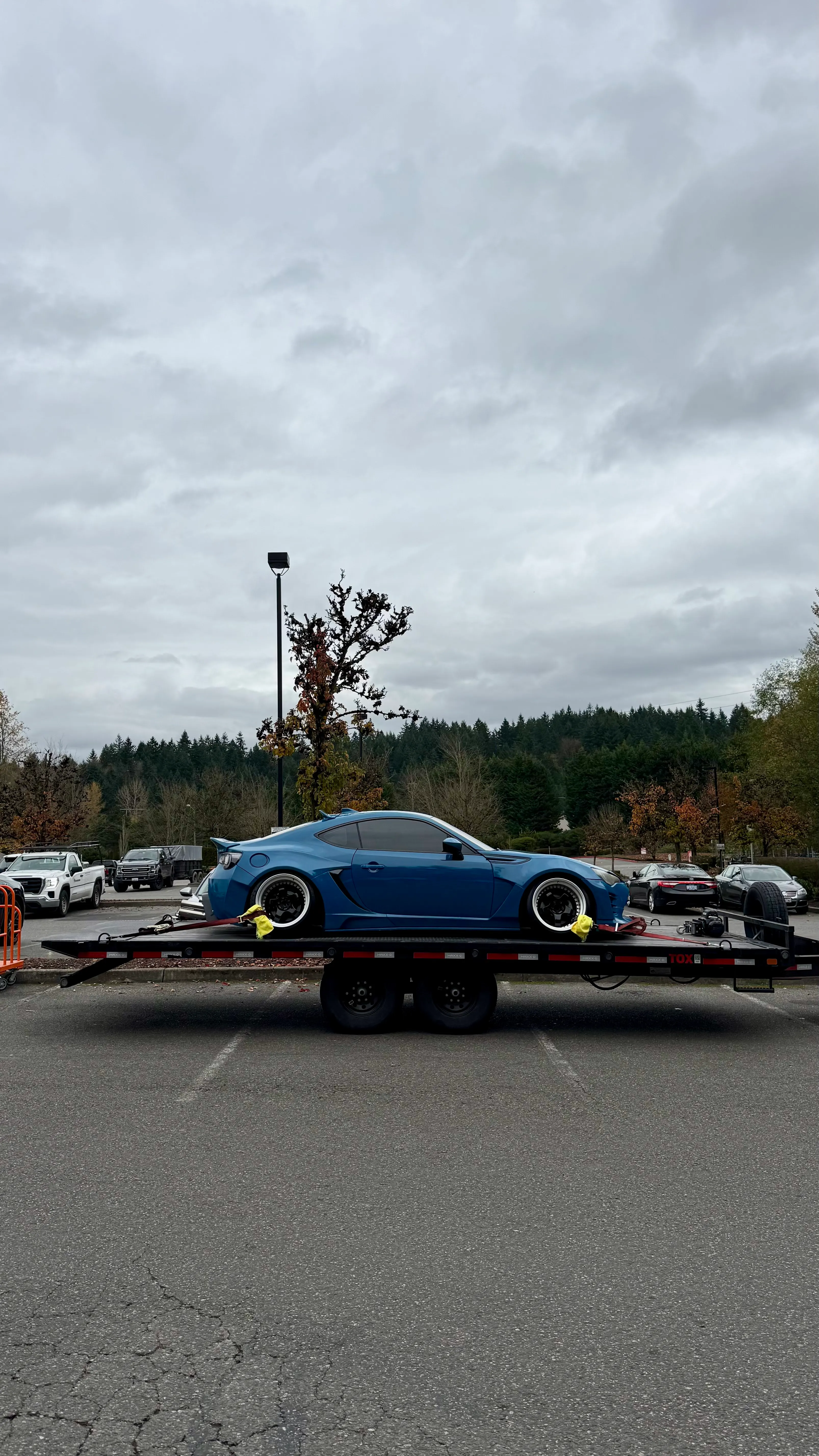
Crank the ratchets tight
Ratchet each strap until it's tight and doesn't flap. Push on the car. If it rocks on the trailer, keep going. Tighten corners in an X pattern (front left, then rear right) so the car stays centered.
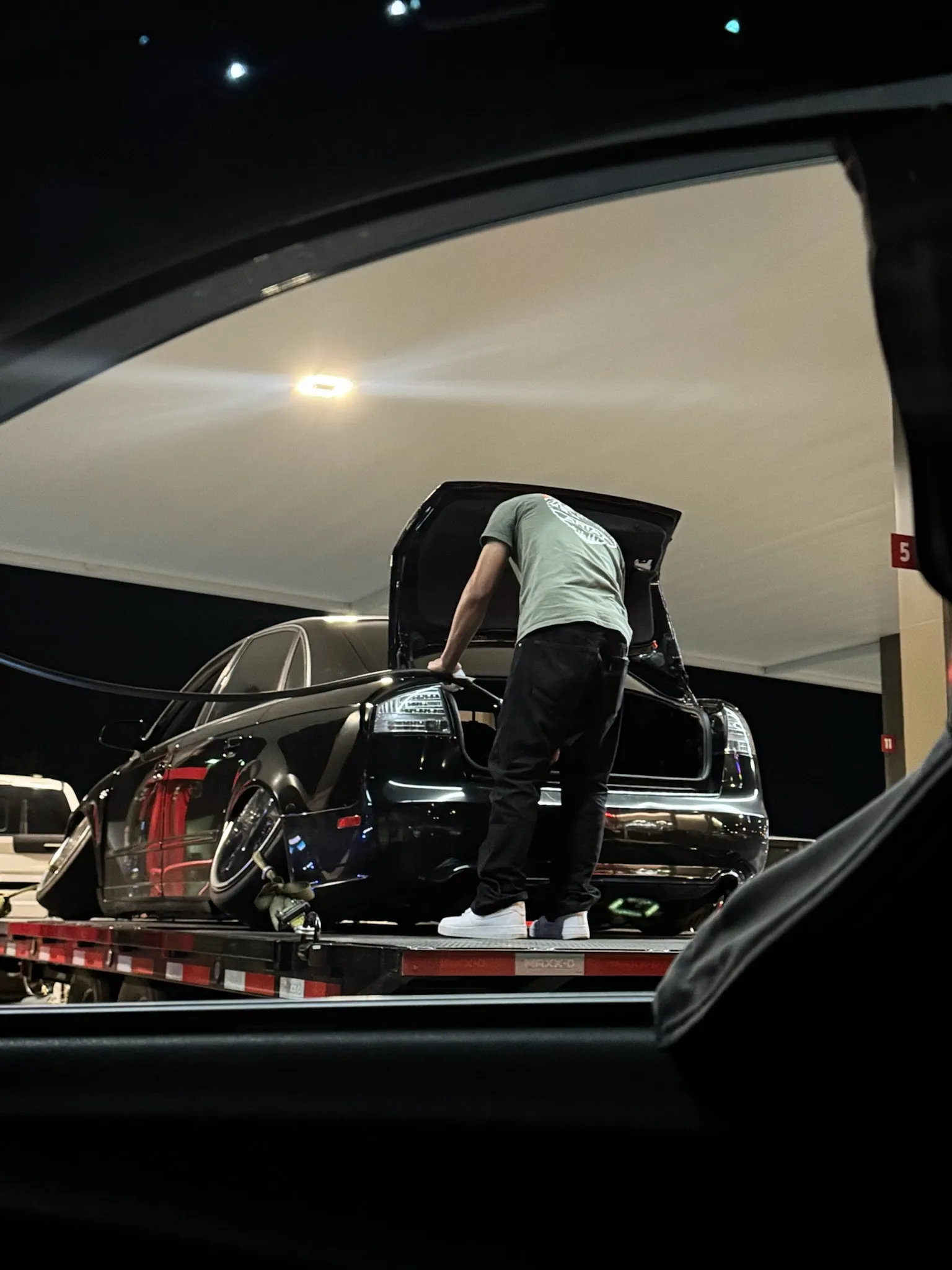
Only hook to tie-down points
Hook strap ends to the trailer's tie-down points, never to the car's bumper, suspension or exhaust. Those parts bend or break under load.
Trailer tie-downs only
Keep straps off sharp edges
Hooks facing in, not out
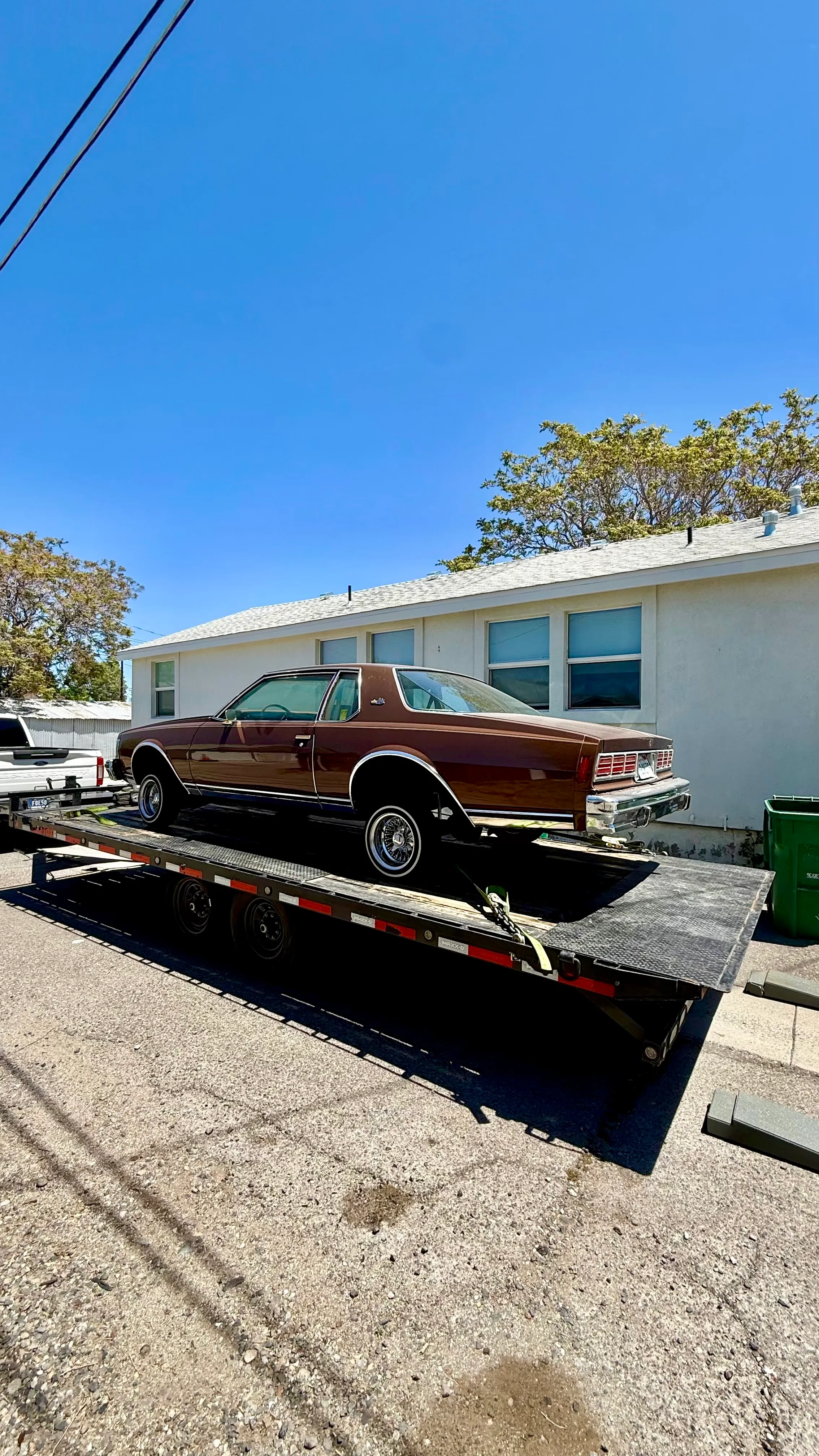

Park it before you strap it
Put the car in park (or in gear for a manual), set the parking brake and turn it off before you touch a strap. If the car can't roll, it's much easier to get the straps even.
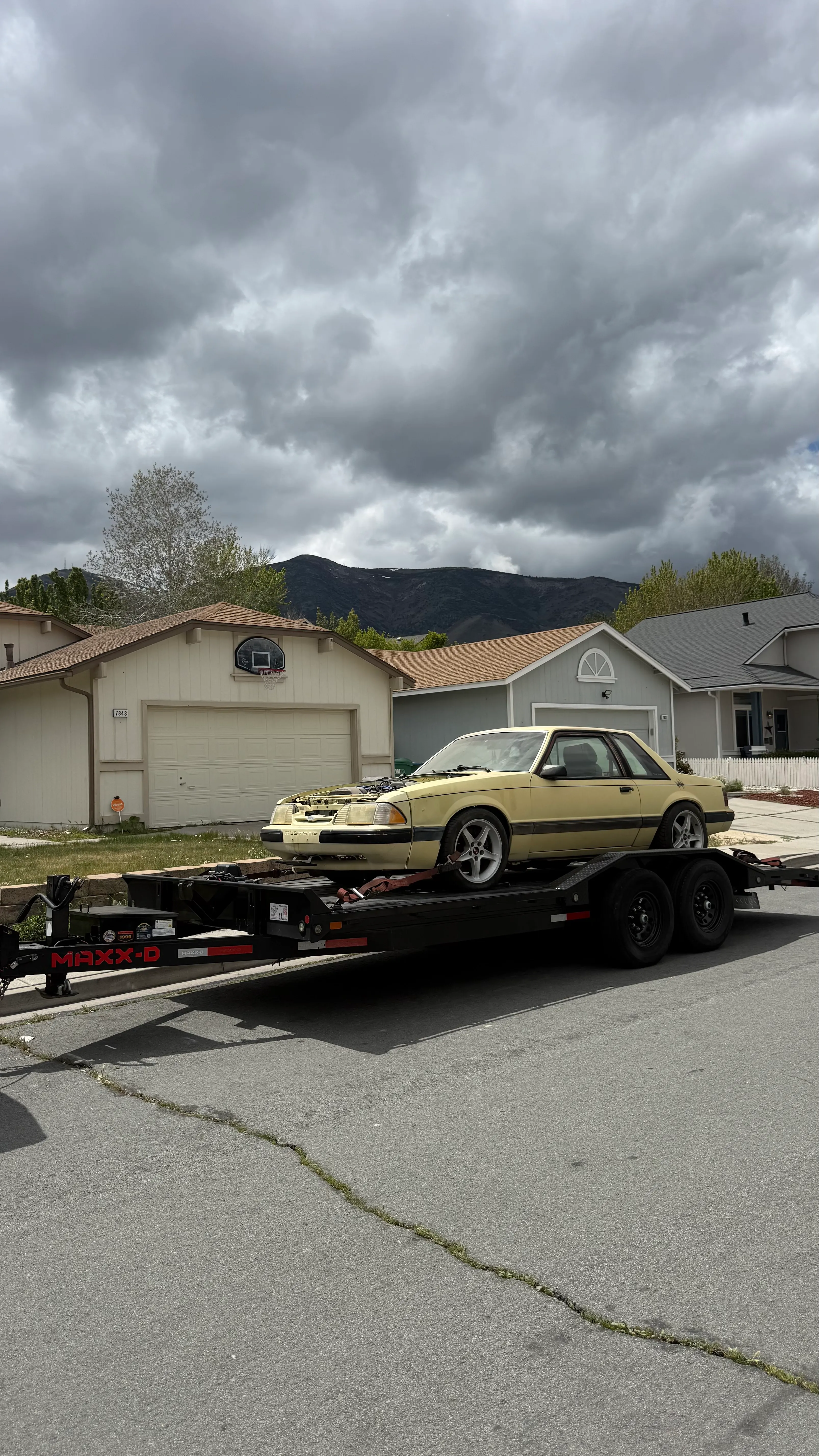
Recheck after the first few miles
Straps settle once you start moving. Pull over somewhere safe within the first 5 to 10 miles and re-tighten, then check again every time you stop for gas.
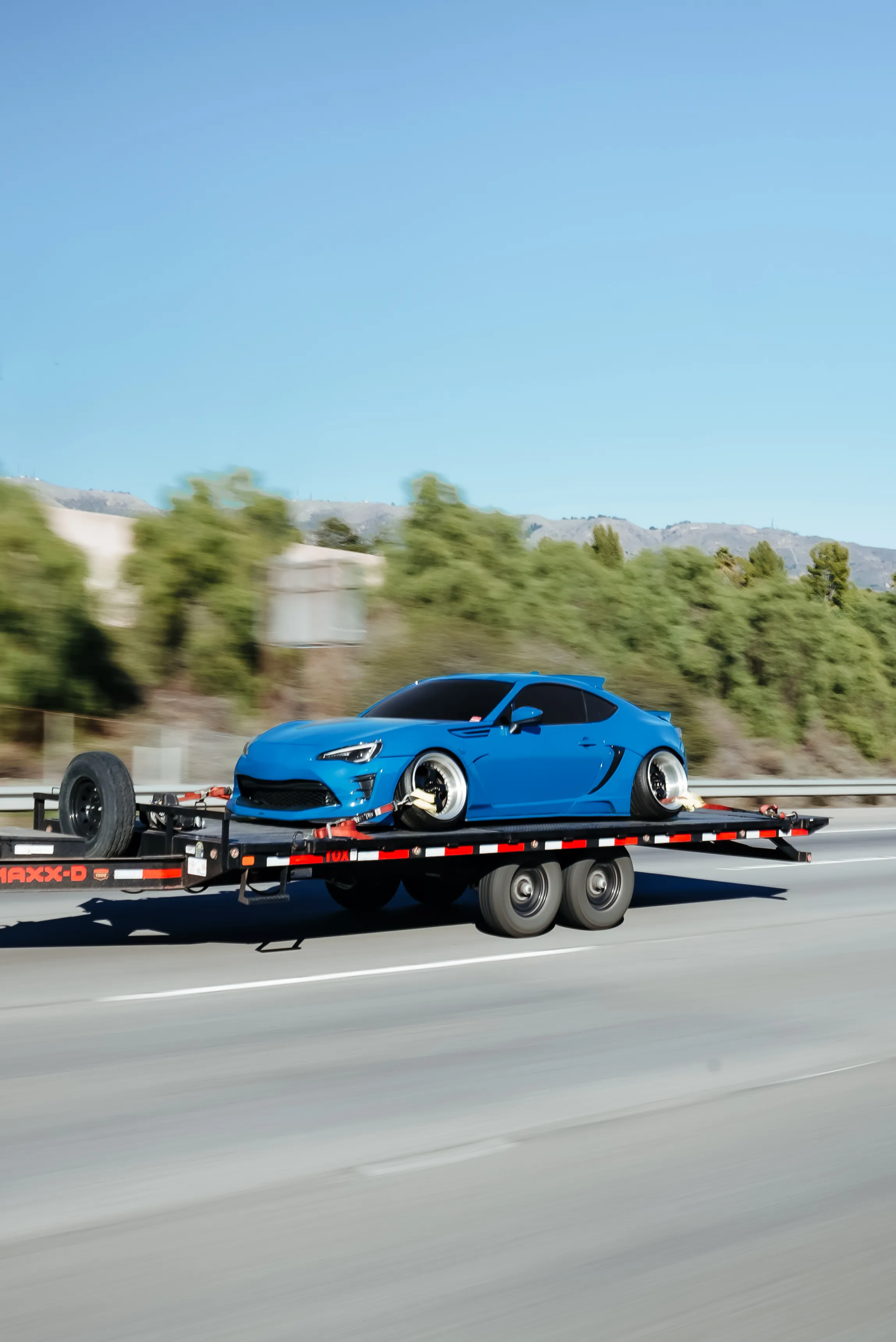
Car won't run? Use the winch
Both car haulers have a 12,000 lb winch at the front. Hook the winch strap to a tow hook or solid frame point, put the car in neutral, and winch it on slowly. Keep people out of the path of the winch line.
Car in neutral, brake off
Hook to a tow point or frame
Nobody standing near the line
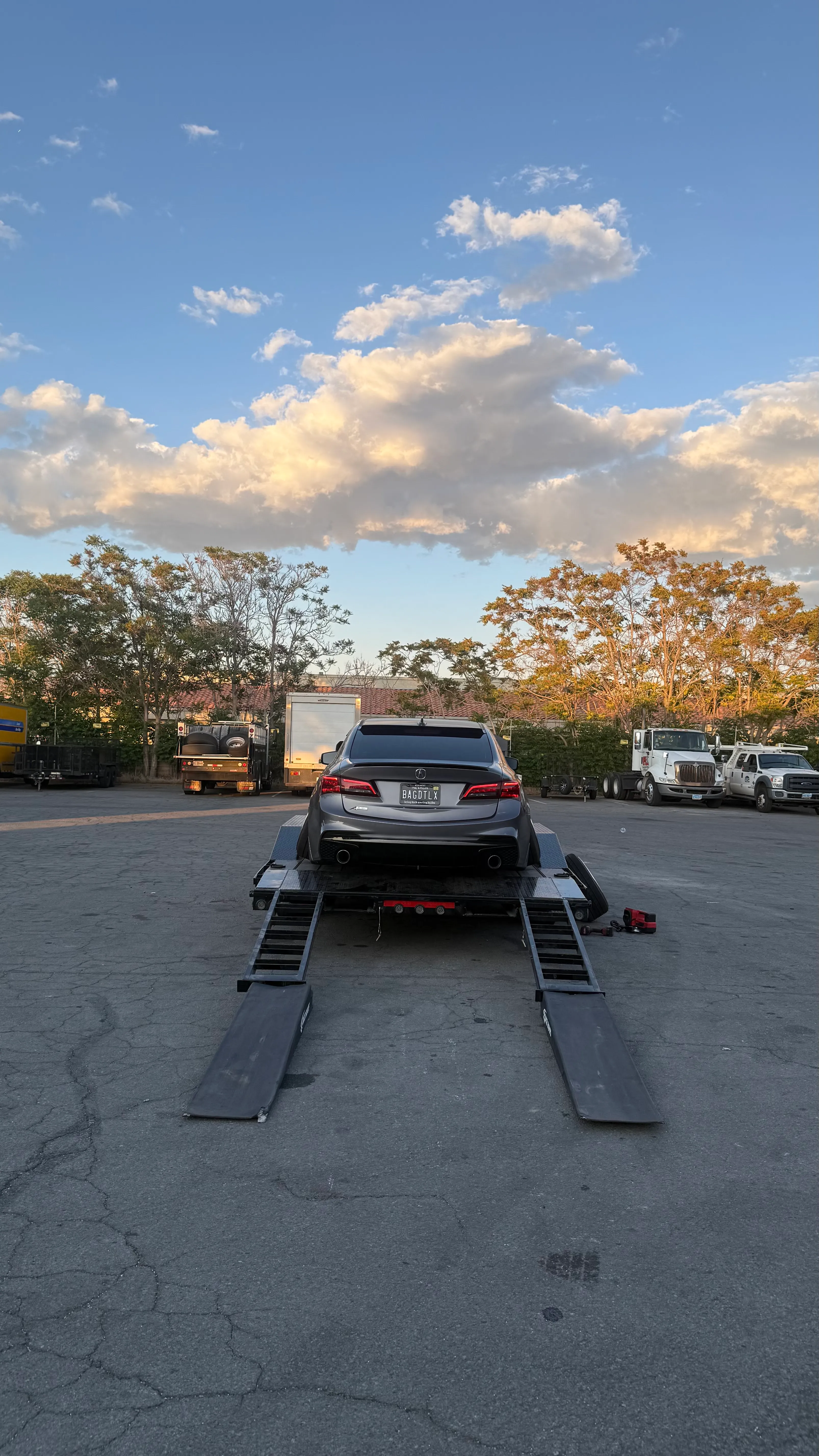
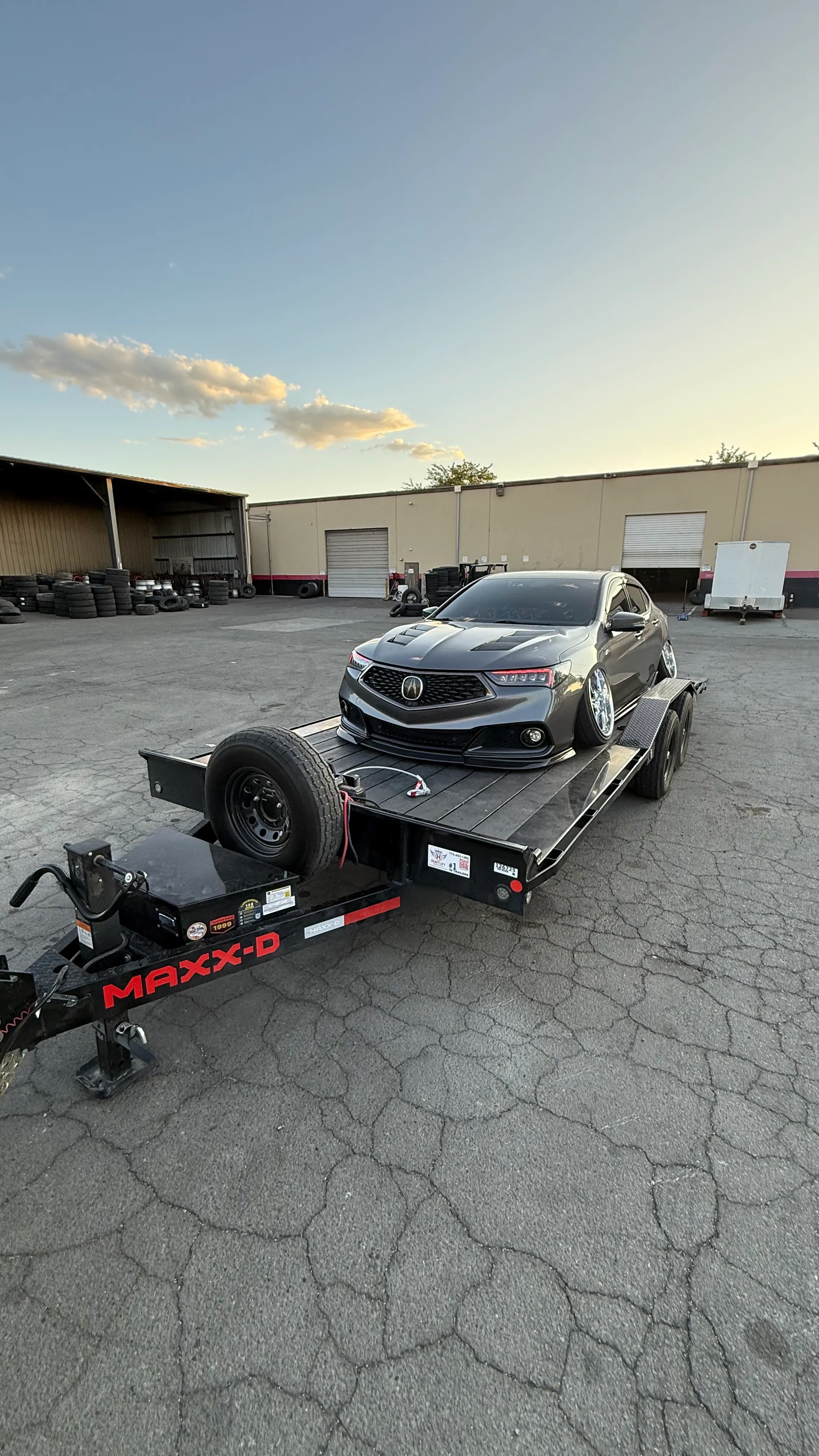
Low car? Get the gravity tilt
If your car is lowered or has a low front lip, book the gravity tilt. The whole deck tips down to the ground, so there's no steep ramp to scrape on. The drive-over is better for trucks and wider vehicles.
Four mistakes to avoid
These cause almost every loading problem we see.
Car too far back
Car too far back
Too little weight on the hitch
This is the number one cause of trailer sway. If the trailer starts to wag, slow down, then pull over and move the car forward.
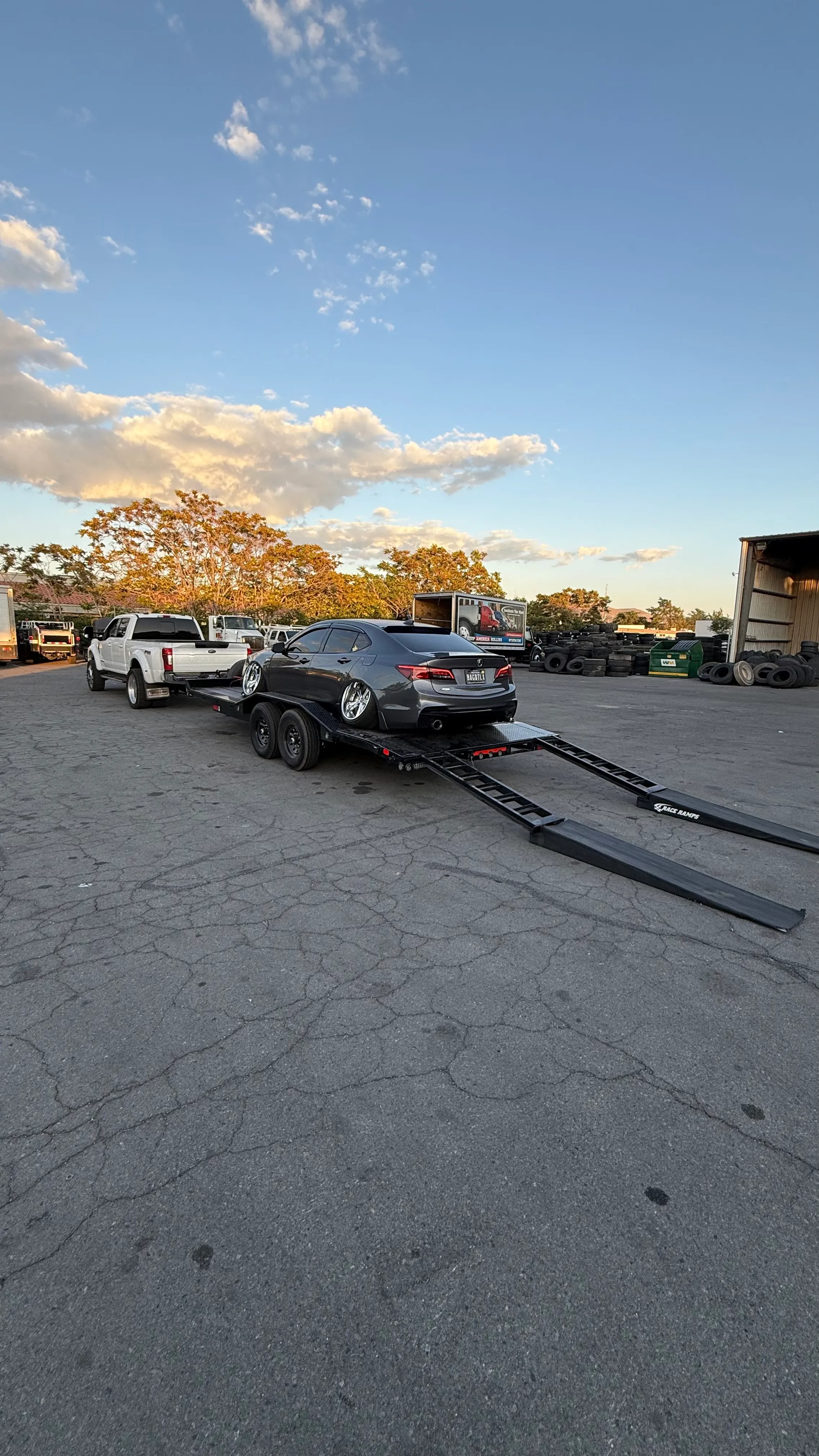
Loose straps
Loose straps
Slack lets the car shift
A strap that looked tight in the lot can loosen after a few miles. That's why you recheck after the first 5 to 10.
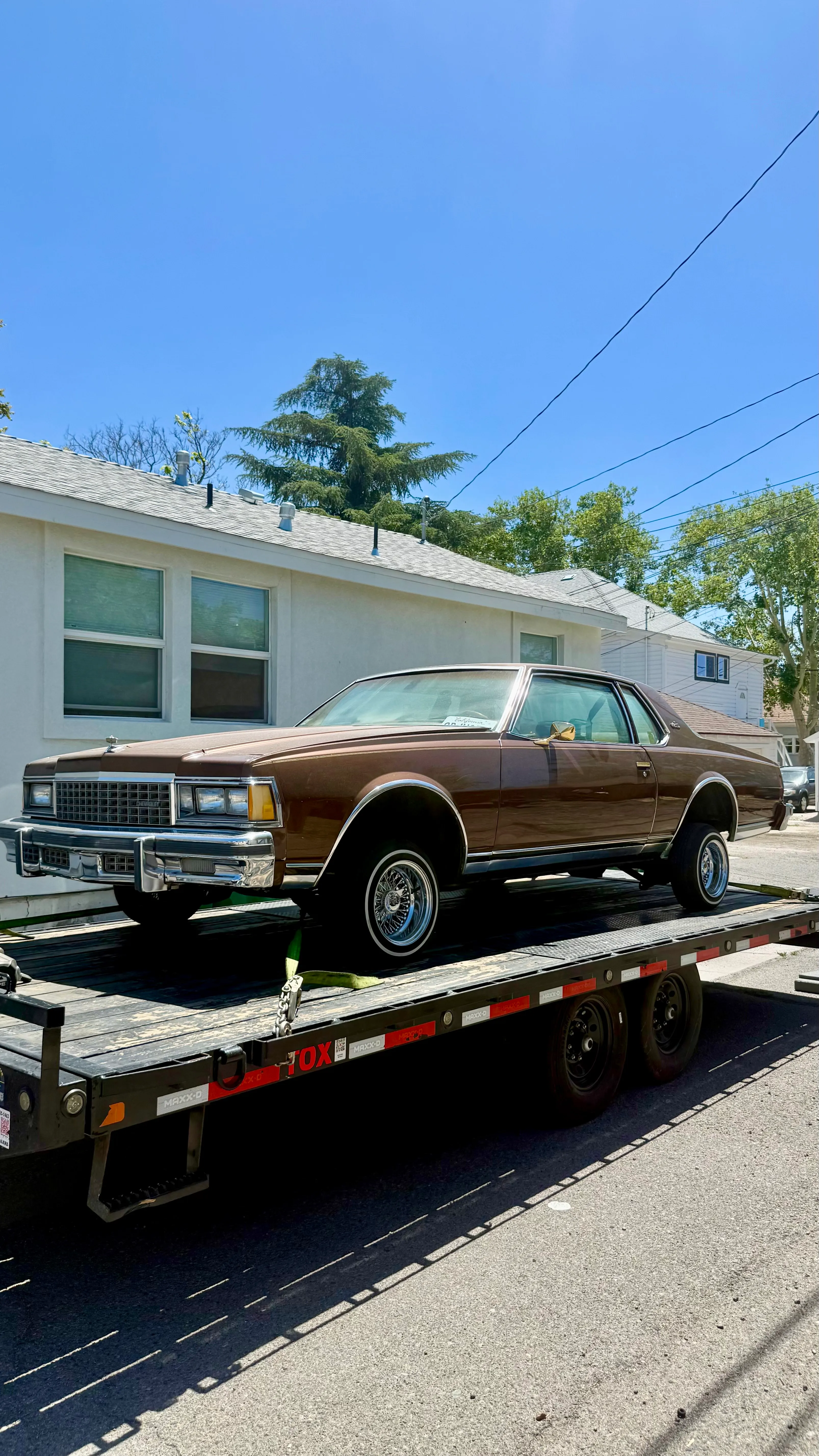
Wrong strap points
Wrong strap points
Bumpers and suspension aren't anchors
Straps hooked to a bumper or control arm can bend parts or pull loose. Go over the tires and hook to the trailer.
Rushing the load
Rushing the load
Speed on the ramps causes damage
Gunning it up the ramps is how cars jump the edge or hit the winch. Walking speed, with a spotter if you have one.

Car centered, engine slightly forward
Same gap on both sides, and the engine just ahead of the trailer's wheels.
All four tires strapped tight
One strap over each tire, hooked to the trailer, no slack or flapping.
Parked, brake set, deck latched
Car in park with the brake on. On the gravity tilt, make sure the deck is back down and latched.
FAQs
What first-time renters ask us most about hauling a car.
Four, one over each tire. They come with the trailer.
The tires. Over-the-tire straps hold the wheels to the deck and let the car's suspension ride normally. Strapping the frame pulls the car down on its springs and can loosen as it bounces.
Tight enough that the strap doesn't flap and the car doesn't rock when you push on it. Recheck after the first 5 to 10 miles.
Yes. All four wheels sit on the deck, so AWD and 4x4 cars are fine. Don't tow them with two wheels on the ground.
Book the gravity tilt. The deck tips all the way to the ground, so most lowered cars roll on without scraping. Go slow and have someone watch the front lip.
Not sure which car hauler you need?
Call or text 775-487-5144 and tell us what you're hauling.
Recheck your
straps regularly
Pull over within the first 5 to 10 miles and tighten every strap again. It takes two minutes.