
How to stop trailer sway
What to do the second your trailer starts wagging, and how to load it so it never does.
Ease off the gas
Take your foot off the gas and let the truck slow down on its own. Speed makes sway worse, so slowing down is the fix. Don't speed up to "pull it straight."
Off the gas
Off the gas
Don't slam the brakes
Hitting your truck's brakes hard lets the trailer push the back of your truck around. Stay off the brake pedal, or press it very gently, until the trailer settles down.
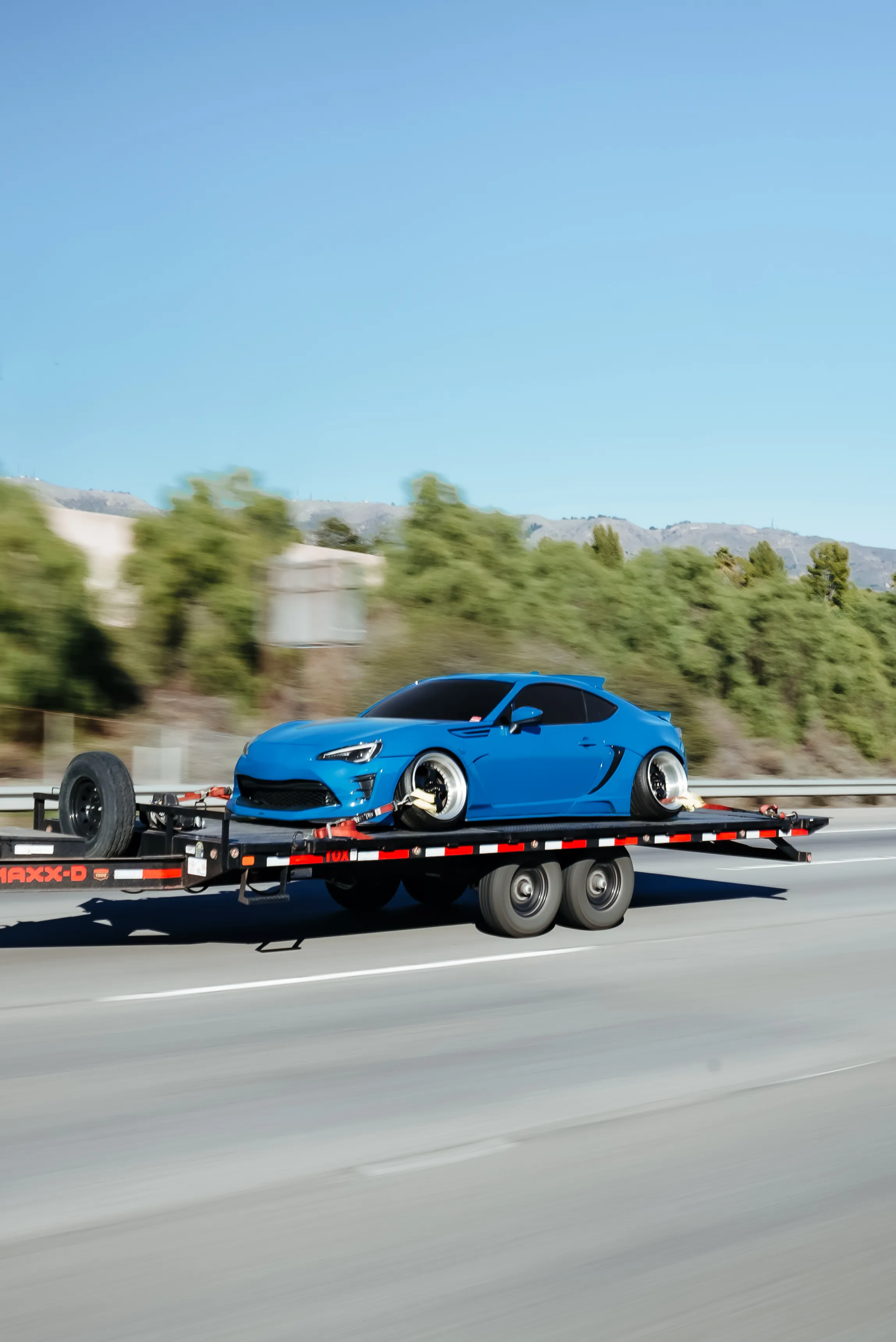
No hard brakes
No hard brakes
Use the trailer brakes by hand
On the car haulers and deckover, slide the manual lever on your brake controller a little. That brakes only the trailer, which pulls it back in line behind you. Utility trailers don't have brakes, so just slow down.
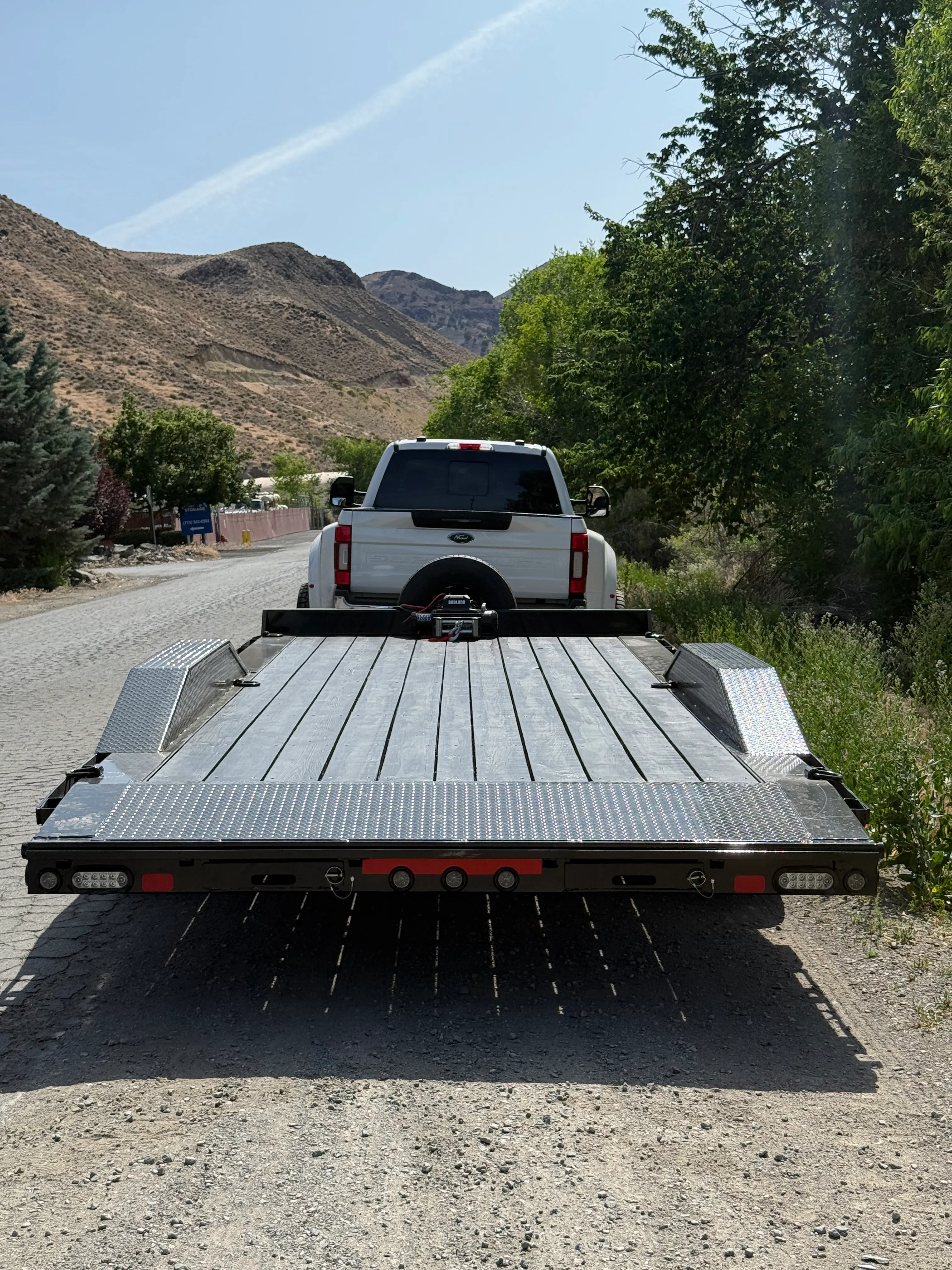
Trailer brakes
Trailer brakes
Hold the wheel straight
Keep both hands on the wheel and steer straight ahead. Jerking the wheel to "catch" the trailer usually makes it swing harder the other way.
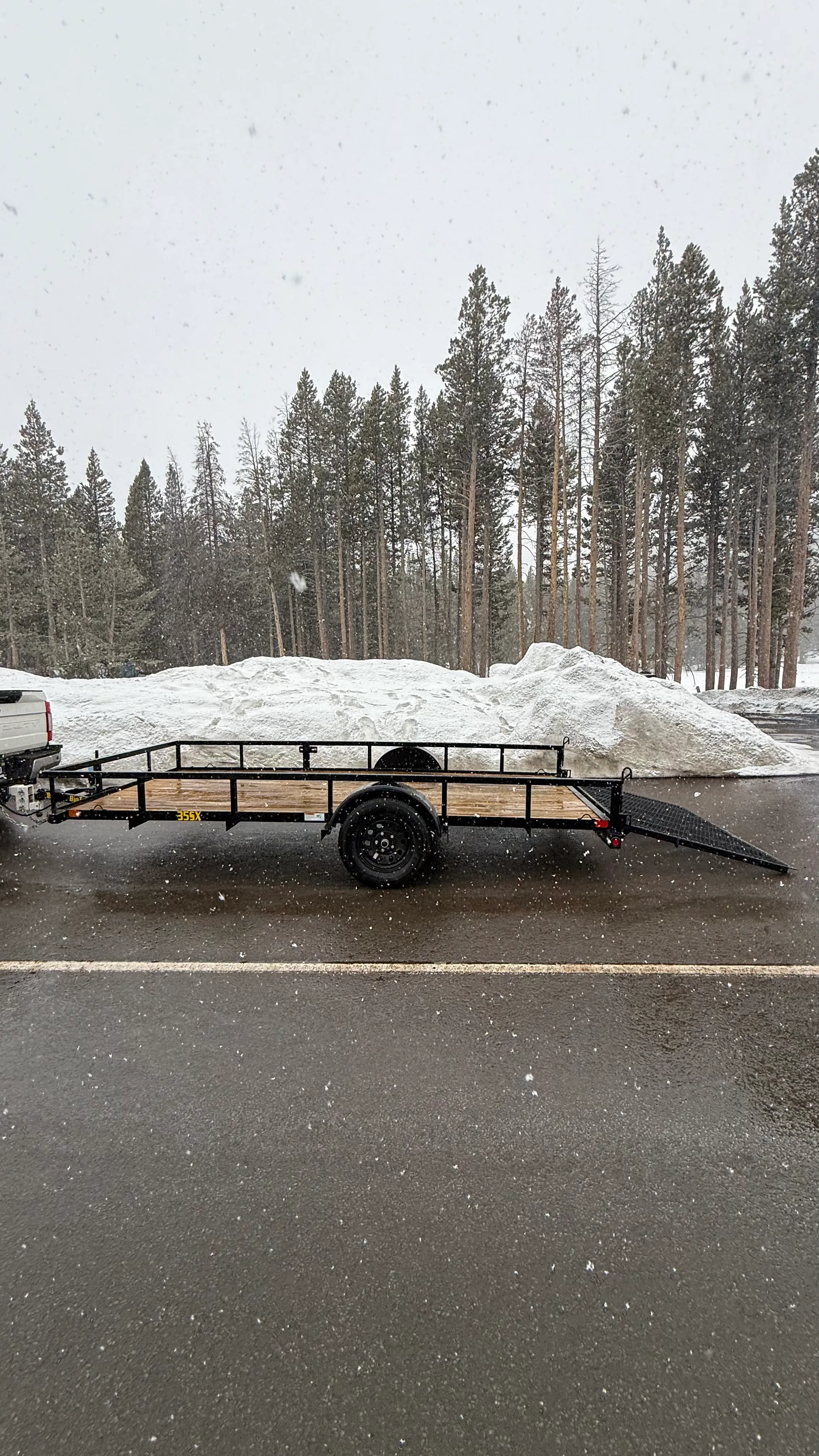
Steer straight
Steer straight
Pull over and fix the cause
Once it calms down, pull off somewhere safe. Nine times out of ten the load is too far back. Move it forward so the heavy end sits just ahead of the trailer's wheels, check the tires, then get back on the road a little slower.
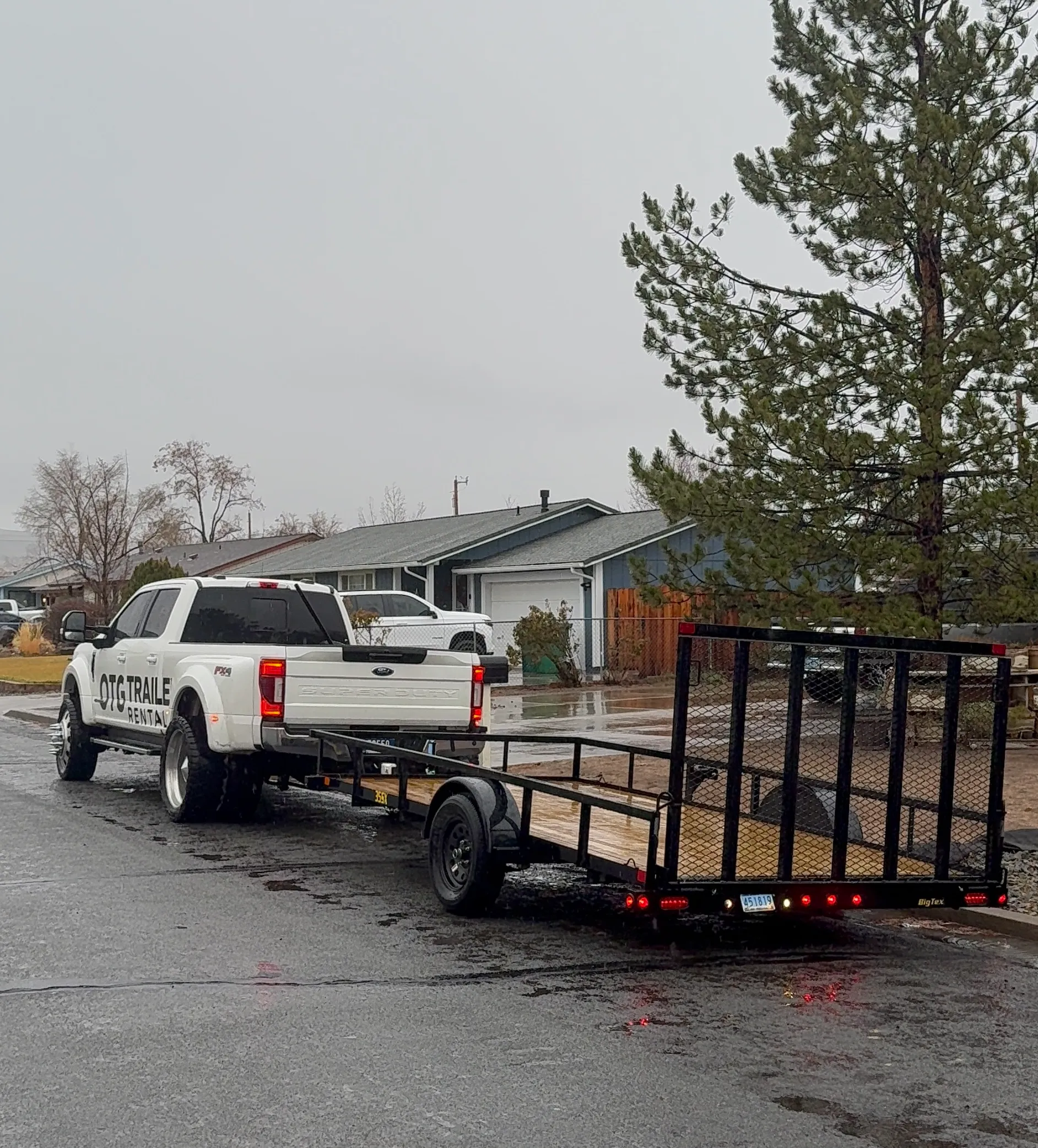
Prevent it before you leave
Get these three right and sway almost never happens.
Heavy end forward
About 60% of the weight ahead of the trailer's wheels. The back of your truck should sit a little lower once you hook up.
Load centered and strapped
Same gap on both sides, and nothing that can shift when you brake or turn.
Under 65 mph
Most trailer tires are rated for 65. Sway gets much more likely above that, especially in crosswinds or when semis pass you.
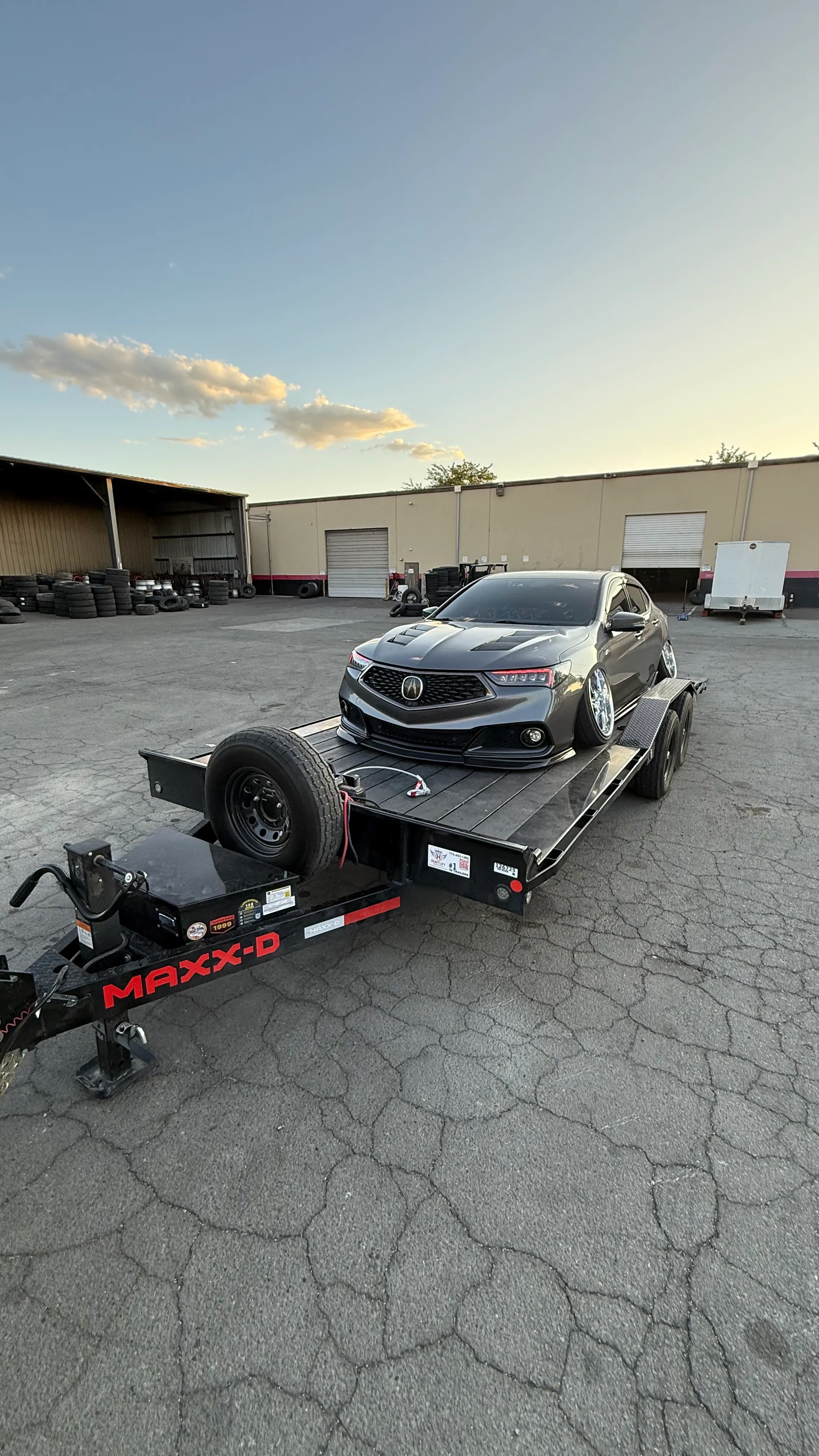
What causes sway
It's almost always one of these, and all of them are fixable in the lot.
Too much weight behind the trailer's wheels
Driving too fast, especially downhill or in wind
Overloaded trailer or a tow truck that's too small
Questions
What people ask us about sway.
The back of your truck gets pushed side to side, or you see the trailer wagging in your mirrors. It usually starts small and grows if you keep your speed up.
Empty trailers are light and get pushed around by wind and passing trucks. Slow down, and on the gravity tilt make sure the deck is latched down.
Most controllers have a slider or paddle on the front. Factory controllers built into the dash usually have a lever or button marked with a trailer symbol. Find it before you leave, not while you're swaying.
Strong crosswinds on I-80 and US-395 can push a trailer around, especially empty trailers or tall loads like sheds. On windy days, slow down and give yourself extra room.
Pull over first and check the load and straps. If it swayed once, something is off, and it'll likely happen again at the same speed. Still not sure? Call us at 775-487-5144.
Still have questions?
Call or text us at 775-487-5144. We'll walk you through it.