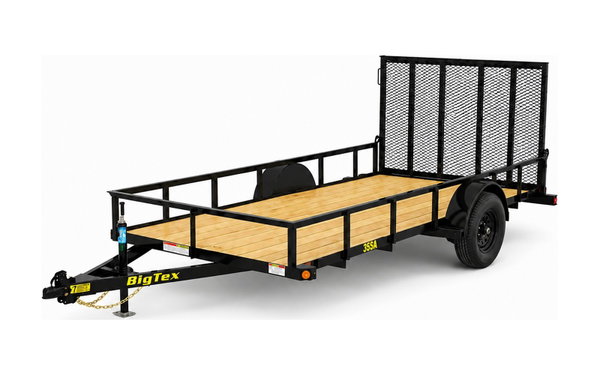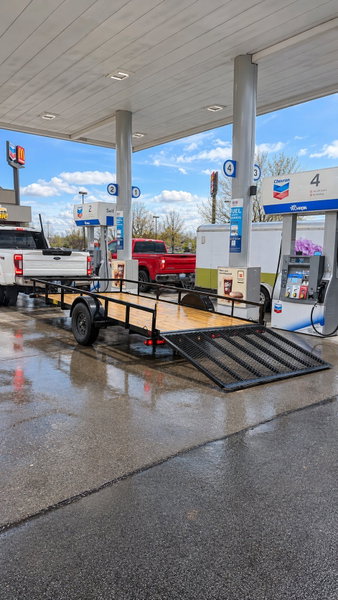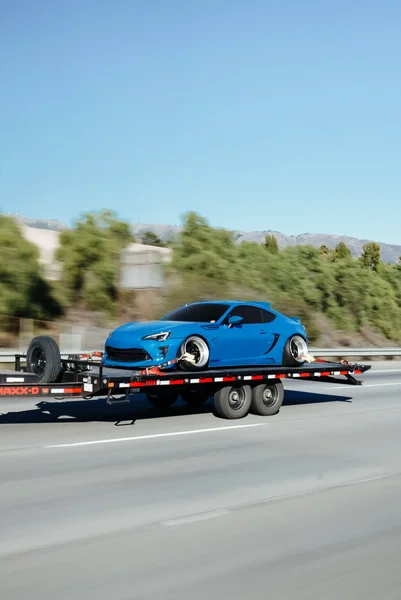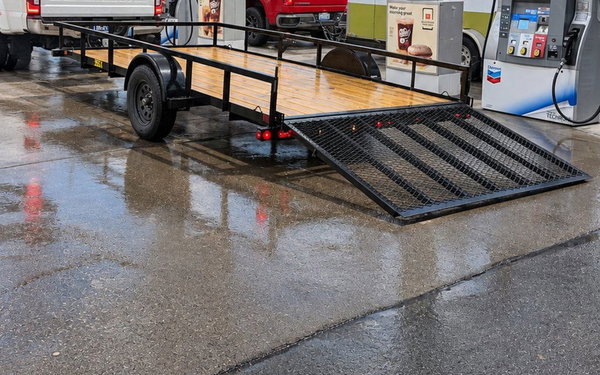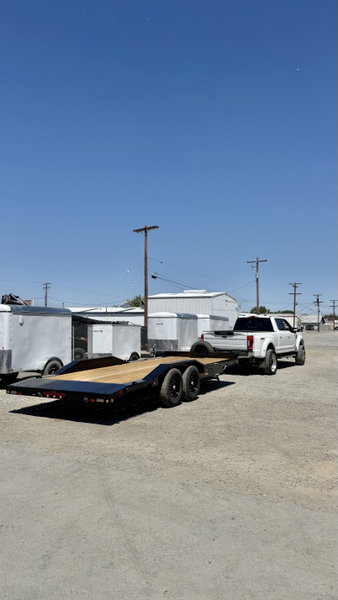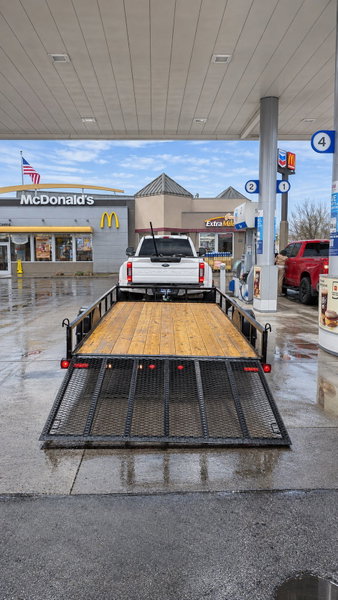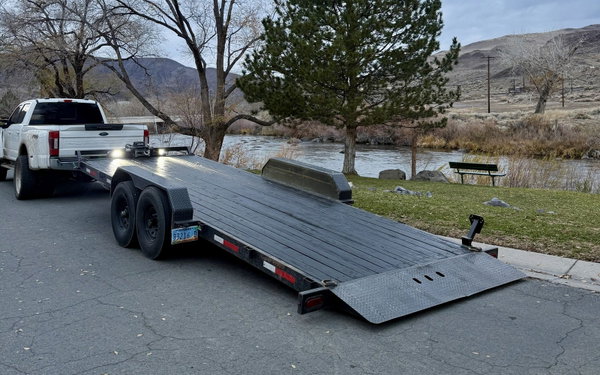

Pick what you're hauling for the full step-by-step guide. The basics are the same for everything: heavy end forward, centered, strapped to the trailer, and rechecked after a few miles.
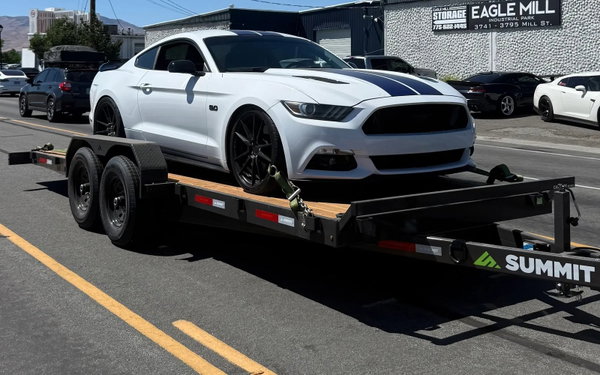
Cars and small SUVs
Loading on the gravity tilt or drive-over, strapping all four tires, and using the winch on a car that won't run.
- Engine slightly ahead of the axles
- One strap over each tire
- Recheck within the first 10 miles
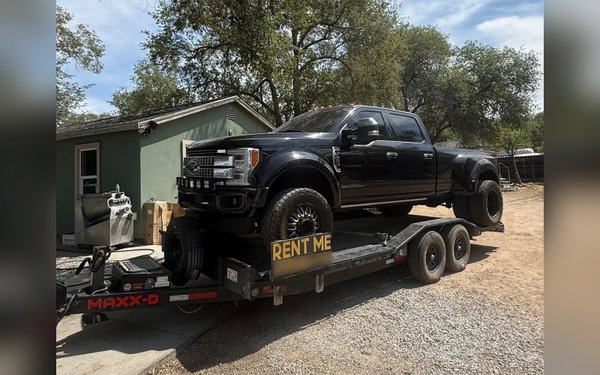
Pickups, duallies and big SUVs
Which trailer fits a dually or lifted truck, how much your truck weighs, and what you need to tow it.
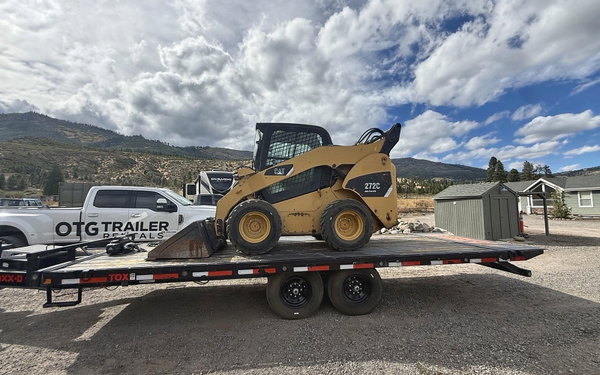
Equipment, sheds and containers
Skid steers, tractors, UTVs, sheds and 20' containers on the deckover. Tie-down points, buckets down, straps over the top.
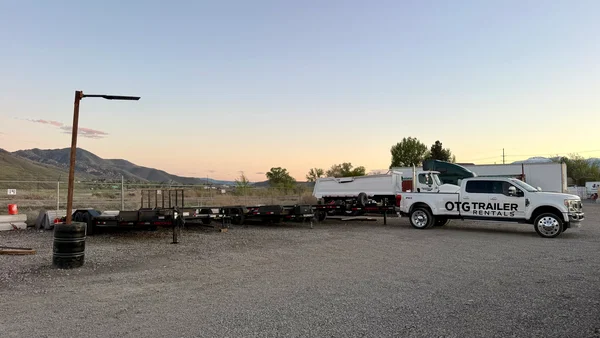
Dump runs, moves and materials
Loading the 5x10 and 7x14 for dump runs and moves, strapping furniture and appliances, and tarping yard waste.
- Heavy stuff against the front wall
- Strap tall items on their own
- Tarp anything that can blow out
Mistakes we see most
No matter what you're hauling, these are the ones to avoid.
- Load too far back. The number one cause of trailer sway. Keep the heavy end slightly ahead of the trailer's wheels. Stop trailer sway
- Not rechecking straps. Loads settle once you're moving. Pull over within the first 5 to 10 miles and tighten again.
- Hooking to the wrong spot. Bumpers, steps, suspension and hydraulic lines aren't anchors. Use the trailer's tie-down points and the load's tie-down loops or frame.
- Load off to one side. An off-center load pulls the trailer sideways and wears out tires. Same gap on both sides.
- Overloading the trailer. Every trailer lists its max load on its page. Heavy machines on the deckover are where people usually go over.
Before you drive
One walk around the trailer before you pull out.
- Load is centered on the trailer. Heavy end slightly forward, same gap on both sides.
- All straps and chains are tight. Push on the load. Nothing should move.
- Ramps stowed, deck latched. Pull-out ramps slid back in and pinned, or the tilt deck latched down.
- Trailer lights are connected and working. Running lights, brake lights and both turn signals.
- Jack up, tires look good. Tongue jack cranked all the way up, and no tire looks low.
FAQs
How many straps do I need?
Four for cars, trucks and equipment, one at each corner. Add more for heavy machines or tall loads. Car haulers and the deckover come with straps. For utility trailers, bring your own.
Should I use straps or chains?
Ratchet straps for cars, trucks, sheds and household stuff. Chains and binders for heavy steel machines. You can add chains and binders to any car hauler or deckover booking for $24.99. Never use rope or bungees for anything heavy.
How tight should ratchet straps be?
Tight enough that the strap doesn't flap and the load doesn't move when you push on it. Don't crank so hard you dent appliances or crush a shed.
How often should I recheck straps?
Within the first 5 to 10 miles, then every time you stop for gas or a break.
Where do I hook the straps?
To the trailer's tie-down points on one end, and over the tires, the load's tie-down loops or its frame on the other. Never bumpers, suspension or brake parts.